

Donald Trump’s 2026 Davos speech unfolded as a masterclass in political intrigue, resembling the conduct of a seasoned Don rather than a conventional world leader. With a blend of extortion, threats, false clemency, and strategic negotiation, Trump’s address was punctuated by a relentless push to assert dominance over Europe and Asia alike. His rhetoric, while laced with flattering words, invariably pivoted to intimidation and ultimatums—reflecting a political strategy grounded in power play rather than diplomacy.
At Davos, Trump’s message was clear: the United States has long carried the financial burden of global alliances such as NATO, and the time has come for others to reciprocate. This framing of NATO as an external imposition rather than a shared commitment starkly highlights his transactional view of international relations. His demands, veiled as firm negotiations, leave little room for compromise—there is but one path forward: acquiescing to his terms. Despite his signature threats, there remains a faint opening for dialogue, consistent with the persona of a savvy businessman who always leaves a sliver of negotiation, albeit on his stringent conditions.
Dissecting Trump’s Davos Speech: A Political Power Play Framed as Negotiation
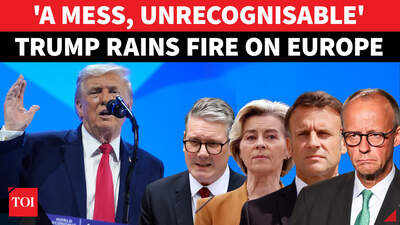
Trump’s 2026 appearance at the World Economic Forum in Davos was a vivid display of political theater, weaving elements of extortion with calculated threats and performative false clemency. His repeated affirmations of affection for Europe, followed swiftly by sharp critiques, represent a dual strategy designed to both charm and unsettle. This oscillation acts like a pendulum, swinging between friendly overtures and intimidation tactics designed to extract concessions.
His characterization of the financial dynamics in NATO further illustrates his transactional worldview. By framing the alliance as a financial obligation disproportionately borne by the U.S., Trump amplifies his demand for a recalibration of power that favors American interests. This stance is a modern incarnation of a strategy akin to extortion, where the implicit threat is disruption of existing alliances unless terms favorable to the U.S. are met.
Moreover, the reference to Greenland, a recurring motif in Trump’s geopolitical calculus, underscores his readiness to combine intimidation with a form of negotiation that leaves little democratic room for dissent. By intermittently softening his stance, he invites dialogue but only on his terms—mirroring a Don’s style of power negotiation.
The Illusion of Clemency: False Promises in Political Transactions
Trump’s history with clemency offers a lens through which to view his Davos posture: presented as magnanimous but often wielded as a political weapon. The 2026 address echoed this theme, as he implied a willingness to reward allies, albeit under terms dictated by leverage rather than genuine goodwill. This insincere clemency reaffirms his reputation for blending benevolence with coercion, blurring lines between genuine pardon and strategic advantage.
Such tactics resonate beyond rhetoric; they reflect a broader phenomenon where political leaders leverage power asymmetries to buttress their agendas. The danger lies in transforming negotiation into transactions where intimidation replaces mutual respect, and extortion masquerades as diplomacy.
From Threats to Negotiation: The Art of Power in Trump’s Address
Trump’s speech at Davos notably encapsulates his approach to wielding power through a blend of intimidation and calculated negotiation. His threats concerning NATO funding and territorial claims signal a willingness to disrupt established norms to recalibrate global power structures. Yet, his acknowledgement that force is not the path forward introduces a calculated paradox: pressure balanced with a veneer of diplomacy.
This tension between threat and negotiation is the hallmark of Trump’s political strategy—pursuing compliance through dominance while sustaining the façade of open dialogue. It serves to keep allies and adversaries alike in a state of wary engagement, reinforcing Trump’s position as a commanding figure reminiscent of a geopolitical Don.
