
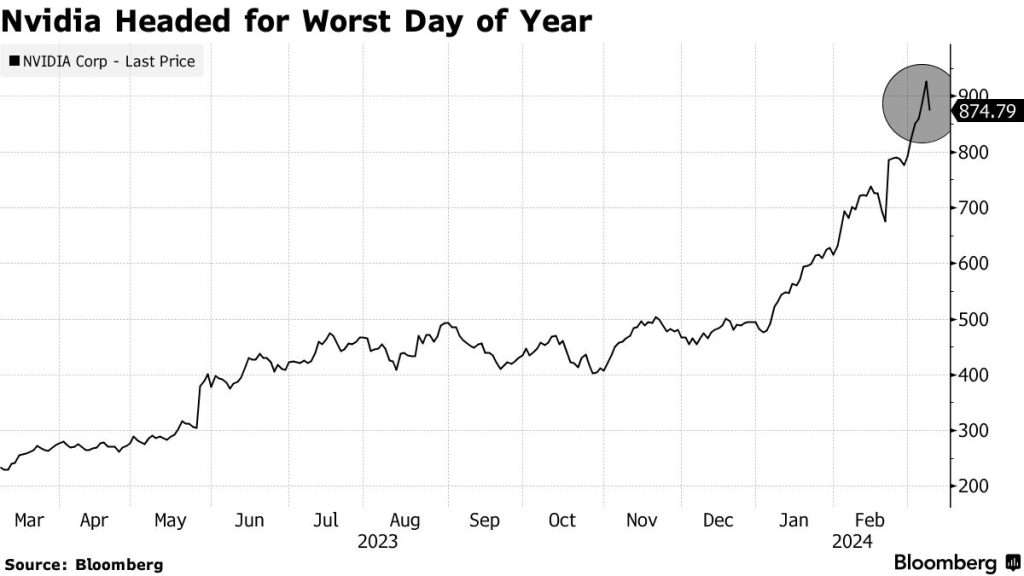
The U.S. stock market is experiencing notable turbulence as futures decline sharply, propelled by fresh export restrictions targeting one of the technology sector’s pillars. Nvidia, a leading player in the semiconductor industry and a heavyweight in AI technology, has seen its shares plummet following the announcement of updated U.S. trade regulations that limit the export of its H20 AI chip to China. These restrictions come amidst a complex backdrop of ongoing trade uncertainties and tariff policies under the Trump administration, creating a climate of market volatility.
Investors are responding not only to the immediate impact on Nvidia’s valuation—marked by a striking charge of $5.5 billion attributed to the new export constraints—but also to broader fears about the future of technology stocks reliant on cross-border chip sales. The ripple effects are visible across futures contracts, with the Dow, S&P 500, and Nasdaq 100 pointing downward early Wednesday. This dynamic reflects the tension between geopolitical trade measures and the global semiconductor supply chain, emphasizing how regulatory decisions disrupt not just individual companies, but investor confidence and market momentum.
Amid this decline, attention turns to corporate earnings reports and economic data releases, as well as to Federal Reserve Chair Jerome Powell’s forthcoming speech, which could provide further clues on the economic outlook in this uncertain trade environment.
Key takeaways in brief:
- Futures contracts on major U.S. indexes are down sharply as investors digest the ramifications of the latest U.S. trade restrictions.
- Nvidia shares plunged following a $5.5 billion charge tied to the curtailment of AI chip exports to China, spotlighting vulnerabilities in the tech sector.
- Trade policies and tariffs under the Trump administration continue to inject volatility into technology stocks and broader market conditions.
- Market participants remain cautious ahead of corporate earnings announcements and key economic indicators.
Futures Show Sharp Decline as U.S. Restricts Nvidia’s AI Chip Exports
The landscape of U.S. stock futures has turned decidedly bearish in response to recent policy shifts curbing high-end semiconductor exports. Futures contracts for the Dow Jones Industrial Average, S&P 500, and Nasdaq 100 have all declined, reflecting a market anxious about the evolving trade regulations impacting technology leaders. Nvidia’s situation epitomizes this concern; the company announced a substantial charge due to export limitations on its H20 AI chip, a vital product previously permitted for sale in China under earlier U.S. sanctions.
Such regulatory moves complicate the supply chain for semiconductors, a sector already sensitive to geopolitical tensions. The repercussions ripple beyond Nvidia, destabilizing investor confidence in technology stocks that thrive on global sales. The sharp futures decline is a tangible manifestation of market participants recalibrating risks associated with ongoing U.S.-China trade frictions and mounting export controls.
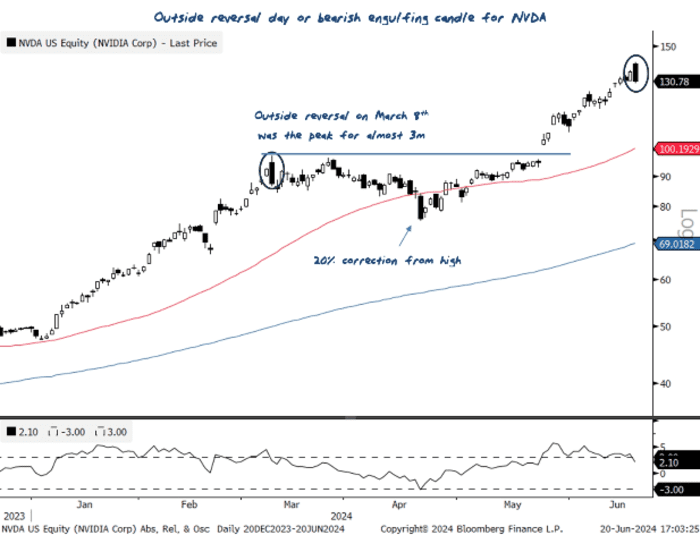
Trade Regulations and Their Impact on Semiconductors and Market Volatility
The financial markets are finely attuned to policy decisions shaping trade relations between the United States and China, especially concerning advanced technology sectors. The updated export restrictions imposed by the U.S. Department of Commerce prohibit the sale of Nvidia’s most advanced H20 AI chip to China, a move aimed at restricting access to critical artificial intelligence technology. This aligns with a broader strategy to maintain technological advantages but triggers immediate market instability.
The semiconductor industry, pivotal to the evolution of multiple cutting-edge technologies, now faces increased scrutiny and operational limitations. The abruptness of such measures fuels volatility not only in Nvidia’s stock but across technology stocks more generally, highlighting the precarious link between international trade policies and equity market performance. With futures trading down across key indexes, the market is signaling caution amidst the fractured landscape of global trade and the ongoing challenge of balancing national interests with investor expectations.
Technology Stocks Bear Brunt as Nvidia Plummets amid Rising Trade Tensions
Technology stocks are visibly stressed as Nvidia leads the decline. The company’s stock tumble is emblematic of the sector-wide impact of U.S. restrictions on semiconductor exports. Investors are wary about the sustainability of growth for tech firms heavily reliant on international markets, particularly those in the semiconductor arena where geopolitical risk is acute.
While Nvidia’s AI chips have become a cornerstone of global digital transformation, the new U.S. rules sharply curtail their distribution to China, the world’s second-largest economy. This introduces not only financial implications for Nvidia but also strategic complications affecting the broader technology supply chain. Market volatility ensuing from these developments signals a pivotal moment where regulatory decisions directly influence trading behavior and valuations in the tech industry.
