
The concept of a broker spread is fundamental in trading, affecting the cost and profitability of every transaction conducted in financial markets. This spread represents the difference between the buying price (ask) and the selling price (bid) of assets such as forex pairs, stocks, commodities, or indices. Understanding the dynamics of broker spreads is essential for traders aiming to optimize their strategies and minimize costs. The spread reflects the broker’s compensation for facilitating trades, embedded within platforms from industry leaders like eToro, IG, or Saxo Bank. Its size fluctuates due to market liquidity, volatility, supply and demand, and trading volume, which directly impacts the tightness or wideness of the spread. As such, it is an essential metric for evaluating transaction costs and overall trading efficiency.
Understanding broker spreads enables traders to navigate financial markets more effectively and choose brokers that align with their trading style, whether scalping or long-term investing. Platforms such as XM and Plus500 often offer features that reflect diverse approaches to spread management, influencing the trader’s potential success. Recognizing how these spreads work and vary helps in making informed decisions and strategically timing trades to leverage market conditions optimally.
The mechanics of broker spreads in trading markets
Broker spreads capture the essential transaction cost embedded in trading, defined by the difference between the asset’s ask price and bid price. This spread can be narrow, as is typical in highly liquid markets like major forex pairs such as EUR/USD or GBP/USD, or broad, which often occurs in exotic pairs or less liquid instruments.
For instance, consider a currency pair like GBP/USD trading at an ask price of 1.2359 and a bid price of 1.2357, resulting in a spread of 2 pips. Conversely, an exotic pair like EUR/TRY may exhibit a much wider spread—sometimes reaching 22 pips—due to lower liquidity and higher volatility. This demonstrates how market conditions and asset types play a pivotal role in spread determination.
Why spread size fluctuates: liquidity, volatility, and market demand
The size of a broker spread is not static but highly influenced by several market factors. Liquidity, or the ease of buying and selling without impacting the asset price, determines the tightness of the spread. More participants and higher trading volumes lead to tighter spreads, reducing transaction costs for traders. In contrast, assets with lower liquidity typically experience wider spreads, making trading more expensive.
Volatility also plays a significant role; heightened price fluctuations often widen spreads to compensate for the increased risk and uncertainty. For example, during heavy economic announcements or unstable political periods, spreads on pairs like USD/JPY or commodities like gold can expand substantially.
Moreover, supply and demand imbalances can cause significant changes in the spread, with high demand and low supply pushing prices higher and tightening spreads under favorable conditions.
Fixed versus variable spreads: differentiating broker pricing models
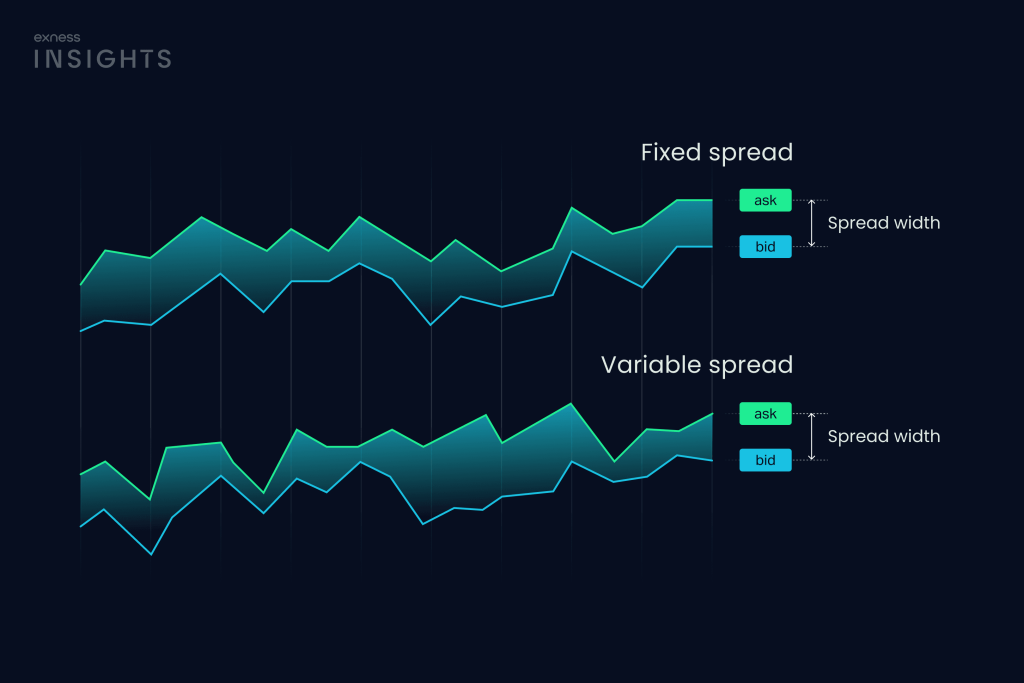
Brokers offer two primary types of spreads – fixed and variable – each catering to different trading approaches. Fixed spreads remain constant regardless of market fluctuations, providing traders with predictable transaction costs. This stability is often favored by traders who rely on precise cost control, especially in less volatile markets. However, fixed spreads may come with drawbacks such as requotes during rapid price changes and potential slippage, limiting the execution speed flexibility.
Variable spreads fluctuate depending on market conditions, reflecting real-time liquidity and volatility. While these can widen under volatile market scenarios, they also allow for tighter spreads during calm trading sessions, potentially reducing costs. Brokers using the variable spread model, like OANDA or CMC Markets, often source prices from multiple liquidity providers, boosting pricing transparency and reducing the chance of requotes.

Calculating the spread and its impact on trading strategy
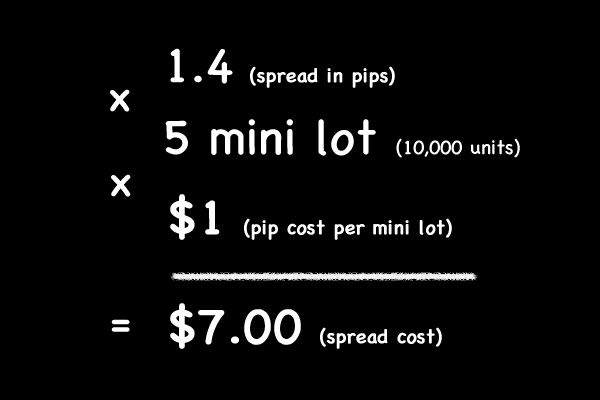
Calculating a spread is straightforward: subtract the bid price from the ask price, with the result usually expressed in pips. This metric informs traders about their direct costs in opening and closing positions. Importantly, the asset price must move beyond the spread gap for a trade to become profitable, meaning that the spread represents an immediate hurdle to overcome.
For scalpers and frequent traders, selecting a broker with consistently tight spreads is crucial, as repeated trading fees can dramatically erode profits. Conversely, for long-term traders, a wider spread might be manageable if balanced by broader market movement and strategy execution.
The broker spread remains a cornerstone concept, central to understanding transaction costs and making informed decisions in the complex world of trading. Mastery of this concept empowers traders to select brokers such as Interactive Brokers or AvaTrade, evaluating their fee structures and stability to fit their trading goals efficiently.
