
Entering the realm of Contracts for Difference (CFDs) offers traders an enticing pathway to speculate on the financial markets without direct ownership of assets. This financial derivative, leveraged for optimal gains, has revolutionized how one can engage with stocks, commodities, currencies, and indices. Leading industry platforms like eToro, IG, Plus500, CMC Markets, Saxo Bank, Pepperstone, AvaTrade, City Index, XM, and FXTM have each refined their offerings to meet growing demand, making CFD trading accessible and sophisticated in 2025. However, while leverage amplifies the potential for profit, it simultaneously intensifies risk, underscoring the necessity for traders to fully grasp operational mechanics and embrace disciplined risk management strategies.
The essence of CFDs lies in the capacity to profit from price fluctuations without acquiring the actual underlying assets. For instance, when anticipating an increase in Apple’s share price, a trader may enter a ‘long’ position with CFDs, profiting as the price ascends, or conversely opt for a ‘short’ position to benefit from anticipated declines. This flexibility in direction, combined with fractional trading options and absence of asset ownership, positions CFDs as a versatile tool within modern trading strategies.
Not all CFD brokers are created equal, and the choice of a broker profoundly impacts trading outcomes. Regulated entities such as those mentioned above often ensure tighter spreads, efficient trade execution, robust customer support, and educational resources that are vital for beginners aiming to cultivate sustainable trading habits. These conditions collectively shape a trader’s environment, influencing costs like spreads, commissions, and overnight financing fees, which, if not managed adeptly, can erode profitability.

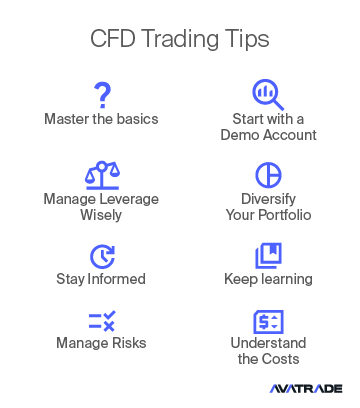
Understanding the mechanics behind CFDs also involves mastering position management — knowing when to enter and exit trades (‘opening’ and ‘closing’ positions), and being able to calculate profits or losses accurately. Leverage enables control over substantial positions with a fraction of capital, yet it demands keen risk management tools such as properly set stop-losses and prudent position sizing to protect capital over the long term. For instance, limiting risk per trade to 1-2% of the trading account can help sustain the trader through inevitable periods of losses.
CFD types vary across asset classes, each suiting different trading preferences: stock CFDs allow exposure to individual equities like Tesla or Google, index CFDs provide a broader market perspective, commodity CFDs deal with raw materials like oil or gold, and currency CFDs (forex) offer round-the-clock trading opportunities with tight spreads and high liquidity. This breadth enables traders to tailor their portfolios while navigating the idiosyncrasies and implied volatilities inherent in each market.
Key Advantages Offered by CFD Brokers for Beginner Traders
CFD brokers empower beginners by providing leveraged trading, which amplifies exposure to markets for relatively low capital outlay. Platforms such as IG and Saxo Bank deliver user-friendly interfaces coupled with comprehensive educational material, guiding novice traders through the complexities of market movements and risk factors. Additionally, many brokers offer demo accounts, enabling newcomers to practice strategies without financial exposure, thus fostering experiential learning.
Two-way trading, a hallmark of CFD trading, permits capitalizing on both bullish and bearish market conditions. For example, if a trader foresees a decline in the FTSE 100 index, entering a short CFD position through Plus500 or Pepperstone can turn market dips into profit opportunities. Furthermore, the absence of fixed expiry dates for most CFDs offers strategic flexibility unmatched by some traditional financial instruments.
Costs remain a critical consideration — traders must evaluate spread breadth, commissions, and overnight financing implications. Brokers differ in fee structures: some like eToro may prioritize commission-free models offset by spreads, while others like City Index might charge commissions but offer narrower spreads. Strategic cost management, such as avoiding unnecessary overnight holding and utilizing limit orders, is essential to preserve trade profitability.
Integrating Effective Risk Management and Strategic Trading Approaches
Discipline in risk management differentiates successful CFD traders from the rest. Employing stop-losses judiciously, avoiding excessive leverage, and adhering to favorable risk-reward ratios (commonly two-to-one or greater) enhance resilience against adverse market moves. These principles are foundational to strategies like day trading, swing trading, and position trading — each suited to specific market rhythms and trader temperaments.
Cutting-edge brokers like FXTM and AvaTrade provide traders with analytical tools, alert systems, and research reports that underpin these methodologies. Meanwhile, seasoned traders emphasize the importance of maintaining detailed trade journals to systematically review performance and refine decision-making processes continuously.
