
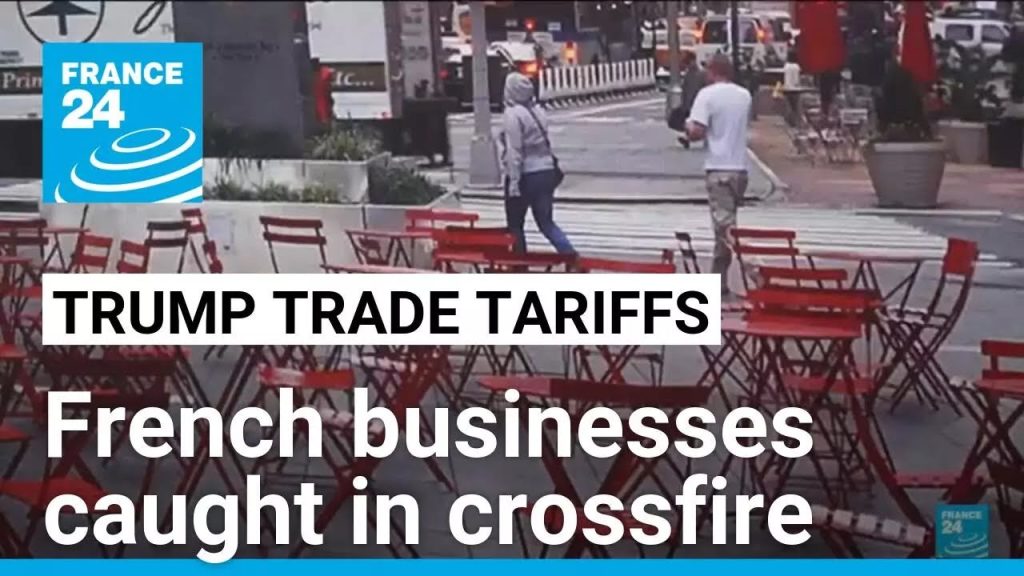
French foreign trade has demonstrated notable resilience amidst the turbulence of the recent trade war initiated by the Trump administration. Despite the imposition of stringent tariffs that sought to recalibrate international trade dynamics, France’s trade deficit has shown a remarkable contraction, signaling an economic revival that challenges prior expectations. This shift stems chiefly from the acceleration of export growth outpacing the marginal increase in imports. Such a trend deconstructs the simplistic narrative of trade wars uniformly harming global markets, illustrating instead the nuanced impacts of trade policy adjustments on US-France relations and beyond.
In brief: The French trade deficit declined significantly due to higher export growth than import expansion. The Trump administration’s trade war imposed tariffs that disrupted traditional trade patterns, yet France adapted through increased export competitiveness. Agro-food sectors faced setbacks, even as services maintained a strong surplus. This complex landscape underscores evolving trade policies and their differentiated impact on various economic sectors within French foreign trade.
French Foreign Trade Resilience in the Wake of Trump’s Tariff Strategy
The dynamics of French foreign trade in the mid-2020s highlight a defiance against the expected adverse effects of the trade war orchestrated under the Trump administration. While the US sought to leverage tariffs as a tool to destabilize competitors and bolster domestic industries, France’s export sector has recorded a 2.5% increase in 2025, reaching a total value of 614.7 billion euros. This surpassed the modest 0.7% growth in imports, valued at 703.6 billion euros, effectively shrinking the trade deficit to 69.2 billion euros from 79.1 billion euros the previous year. This shift is especially significant given that France endured a historic deficit peak of 161.7 billion euros in 2022 due to soaring energy costs. The recovery suggests strategic resilience and adaptive capabilities within French industries, despite external geopolitical pressures.

The Tariffs Impact on Different French Economic Sectors
Trade wars often bring uneven repercussions across sectors, and France’s experience reaffirms this. The agro-food sector, a traditional pillar of French exports, has seen its positive balance deteriorate markedly to only 200 million euros in 2025, its lowest since the early 2000s. This dip underscores vulnerabilities amid shifting global demand and heightened competition exacerbated by tariffs affecting supply chains and export pricing. However, this underperformance contrasts sharply with the services sector, which posted a robust surplus of 55.6 billion euros, a slight dip from 56.7 billion euros in the prior year but a clear buffer against goods deficits. The differing sectoral outcomes reflect the complex interplay of tariffs impact and the resilience of knowledge-intensive industries within international trade frameworks.
How US-France Relations Shaped French Export Strategies Amidst Global Market Fluctuations
The evolution of trade policy under the Trump administration imposed an imperative for French exporters to reassess their positioning within global markets. Restrictions and uncertainties arising from tariffs catalyzed a strategic pivot toward diversification and innovation to sustain export growth. French manufacturers, such as those in aerospace exemplified by Airbus’s operations in Colomiers, leveraged technological advances and quality branding to maintain appeal despite rising trade barriers. This ability to adapt not only moderated the impact of tariffs but also contributed to reversing the trade deficit trend, fostering a narrative of economic revival. Additionally, the nuanced diplomatic engagements between the US and France influenced bilateral trade flows, mitigating worst-case scenarios and preserving essential transatlantic commerce.
Such developments warrant close attention for those analyzing the long-term shifts in international trade balance sheets. The French case embodies how resilient economies can harness export growth to counteract negative pressures from aggressive trade policies. For individual traders and brokers, understanding these mechanisms is key to navigating the complexities of global market fluctuations and tariff impacts.
To explore deeper into the intricacies of how tariffs and trade wars shape global commerce, insights can be enriched by consulting expert analyses such as those found on this detailed briefing and this comprehensive review of France’s trade environment.
