
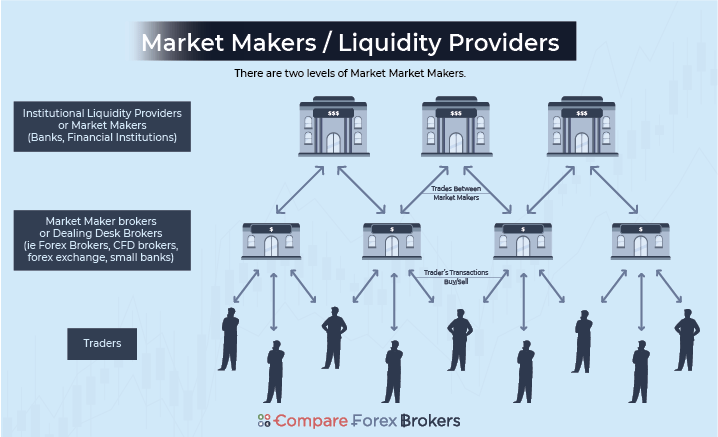
In the intricate world of financial markets, where every millisecond counts and liquidity dictates opportunity, market-maker brokers play an indispensable role. These entities are not just intermediaries; they are the vital engines that keep trading seamless and continuous. Acting as liquidity providers, market-makers constantly offer to buy and sell securities, ensuring that investors can enter or exit positions without delay and at competitive prices. Their operation underpins the fluidity and efficiency of today’s markets, from the bustling floors of renowned exchanges to the digital platforms of IG, Plus500, and eToro.
Given the complexity and crucial function of market-maker brokers, understanding how they operate unveils the mechanics behind seemingly instantaneous trade executions and narrow bid-ask spreads. Unlike traditional brokers who merely connect buyers and sellers, market-makers maintain an inventory of securities and take the opposite side of client orders. This posture enables them to manage supply and demand imbalances instantly, offering continuous pricing and mitigating the illiquidity risks that plague less active markets. By leveraging high-frequency trading algorithms and rigorous risk management strategies, these brokers harmonize the pace of the market even during periods of volatility.
However, market-makers operate within a regulated environment that enforces transparency and fairness, governed by bodies like the SEC and FINRA. Competitive pressure among firms such as CMC Markets, FXCM, Saxo Bank, and Markets.com further drives innovation and tighter pricing, ultimately benefiting the trader. While the spread between bid and ask prices represents their profit margin, the intense competition and technological advances compel market-makers to pursue price improvement, often offering better terms than the National Best Bid and Offer (NBBO) mandates. Exploring the landscape of market-making not only reveals its technical function but also its strategic importance to the capital markets ecosystem.
How Market-Maker Brokers Ensure Market Liquidity and Efficiency
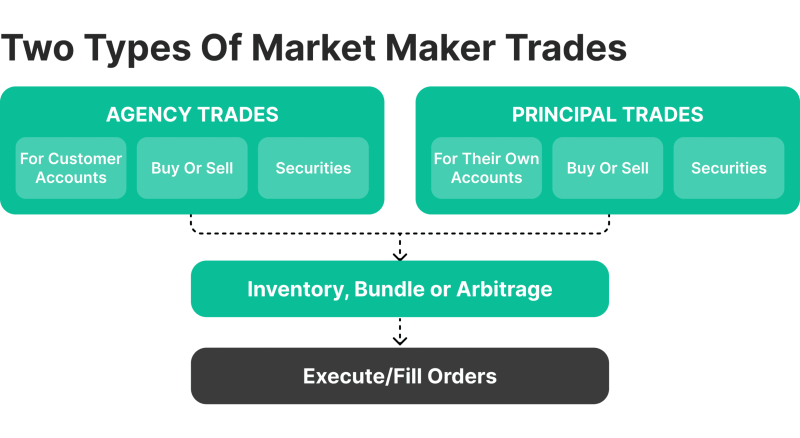
A defining characteristic of market-maker brokers is their commitment to providing liquidity at all times. Unlike an ordinary brokerage, which simply matches buy and sell orders between clients, market-makers stand ready to buy securities from sellers and sell securities to buyers every moment within trading hours. This two-sided quoting system guarantees that a security’s market remains liquid, allowing for swift transactions that reflect real-time price movements.
The value they bring is illustrated starkly when trading less popular securities or during periods when the market lacks balanced demand and supply. In these cases, without market-makers, investors might face significant delays or be forced to accept unfavorable prices. Yet, through continuously quoting both bid and ask prices, brokers like AvaTrade and City Index create a dynamic marketplace where orders cross promptly, anchored by competitive spreads often no wider than a few cents. As these market-makers adjust their prices based on supply and demand, they effectively smooth price volatility and tighten spreads, fortifying market stability.
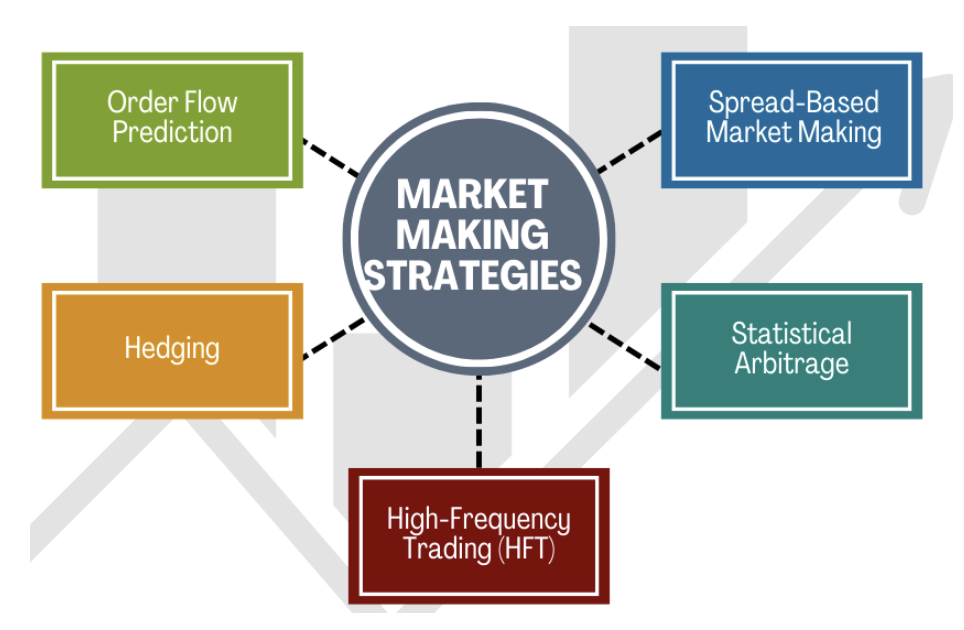
In practice, their role extends beyond mere facilitation. Market-makers utilize sophisticated inventory management and hedging techniques involving options and futures to mitigate risks. This risk-averse stance allows them to operate as neutral players detached from directional bets on market trends, focusing exclusively on profiting from the differential between bid and ask prices. Such neutrality shields market-makers from volatile swings while ensuring consistent market availability.
Revenue Model: Profiting from the Bid-Ask Spread
The primary revenue stream for market-maker brokers hinges on the bid-ask spread—the difference between the price at which they purchase securities and the price at which they sell them. For instance, purchasing shares at $10.00 and selling them at $10.01 nets a profit of one cent per share, which might seem trivial in isolation but accumulates significantly across large volumes, particularly given the staggering average daily U.S. stock trading volume of over 11 billion shares.
This volume-driven approach means market-makers operate on razor-thin margins, relying on transaction frequency and speed rather than directional speculation. Importantly, unlike speculators or fund managers, market-makers do not hold a market view; they maintain a market-neutral strategy aimed at capturing small, consistent profits from numerous trades. Advanced algorithmic systems support this process, enabling high-frequency trading that accounts for a substantial proportion of trade executions. As a result, firms such as IG, Saxo Bank, and Plus500 harness technology to refine their market-making efficiency and competitiveness.
Regulatory Oversight and Ethical Considerations in Market Making
Despite operating behind the scenes, market-makers are subject to stringent regulatory frameworks designed to maintain market integrity and protect investors. Entities like the SEC enforce rules ensuring that market-makers adhere to quoting the National Best Bid and Offer (NBBO) or better. This regulation fosters price transparency and prevents exploitative widening of spreads that could disadvantage retail traders.
Nevertheless, the rise of high-frequency trading and complex algorithms has introduced challenges, including concerns about manipulative practices such as spoofing and front-running. Regulators actively monitor these activities, mandating compliance and penalizing violations to uphold a fair playing field. Moreover, brokers actively competing through platforms like CMC Markets and FXCM often offer price improvements to outbid competitors, translating to direct savings for traders and reinforcing the merit of competitive liquidity provision.
Understanding payment for order flow (PFOF) further clarifies market dynamics. This arrangement, where market-makers compensate brokers for routing orders their way, has drawn scrutiny but remains a prevalent practice. Transparency in such financial incentives is essential to avoid conflicts of interest and ensure investors receive the best execution prices. Many leading platforms provide commission-free trading options, as outlined in resources exploring commission-free trading brokers, allowing traders to benefit indirectly from a liquid and efficient market infrastructure.
Technology and Competition Driving Market Innovation
Technological advancements continue to reshape the landscape of market-making brokers profoundly. Automated trading algorithms and real-time data analytics empower brokers like OANDA and Markets.com to offer faster execution and tighter spreads, enhancing trader experience and market depth. Competition among a broad array of firms, including Saxo Bank and AvaTrade, propels continuous improvement in service and platform sophistication.
Additionally, as detailed in discussions around trading platform features, the integration of user-friendly interfaces, sophisticated charting tools, and seamless order execution systems plays a pivotal role in how market-makers operate effectively today. This technological edge ensures that liquidity is accessible not only to large institutions but also to retail traders across the globe, democratizing market participation.
