
In 2025, the resurgence of Donald Trump as U.S. president sent shockwaves through the global trade landscape, manifesting as heightened tariffs and unpredictable market movements that reshaped international commerce. This volatile environment stirred economic tremors across continents, as import taxes soared to levels unseen since the Great Depression, challenging the foundations of international trade relations. The ripple effects compelled major global economies to engage in urgent negotiations, balancing national interests against the pressures of sustaining market stability.
The sudden imposition of tariffs, designed to rejuvenate a faltering U.S. industrial sector, intensified trade wars that reverberated beyond American borders, influencing supply chains and pricing structures worldwide. These aggressive trade policies not only strained relations with China, the European Union, and key partners such as the UK and Japan, but also introduced an era of uncertainty that market participants grappled with. Amid fluctuations in consumer prices and persistent inflationary concerns, investors recalibrated strategies to navigate the unsteady waters of global trade, highlighting the intricate interplay between tariffs and market volatility.
Despite forecasts predicting economic downturns and soaring inflation, the U.S. economy displayed remarkable resilience, fueled by investments in emerging technologies like artificial intelligence and robust consumer spending. This paradox underscores the complex dynamics of trade wars and the adaptive capacity of the global economy. Nevertheless, legal challenges surrounding the legitimacy of tariffs introduced fresh uncertainties, as cases awaited adjudication by the U.S. Supreme Court in early 2026, threatening to redefine the trajectory of international markets.
The unfolding developments frame 2026 as a critical juncture for global commerce, where diplomatic finesse and economic pragmatism will determine whether the tremors set off by Trump’s tariff policies evolve into sustained turbulence or pave the way for renewed trade stability.
- Trump’s tariffs elevated U.S. import taxes to a historic 17%, reversing decades of trade liberalization.
- Global partners scrambled to negotiate reduced tariffs in exchange for billion-dollar American investments.
- China’s trade surplus surpassed $1 trillion, leveraging diversification to withstand U.S. tariffs.
- Contrary to predictions, the U.S. economy swiftly rebounded, driven by AI investments and consumer resilience.
- Legal disputes over tariffs continue to cast a shadow over the trade landscape ahead of critical 2026 court rulings.
Understanding the Trump-Induced Shifts in Global Trade Dynamics
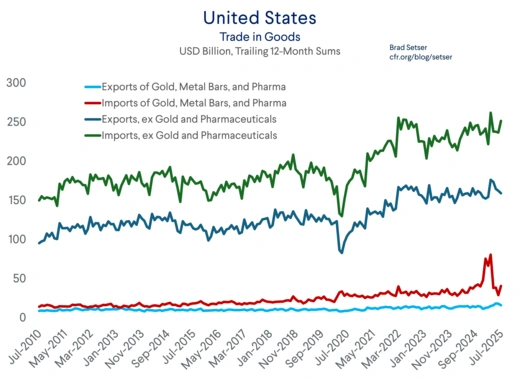
The drastic elevation of U.S. tariffs, motivated by a strategic intent to revive domestic manufacturing, marked a seismic shift in global trade. In elevating the average import tax rate to nearly 17%, President Trump disrupted established supply chains, compelling traders and governments alike to rethink market strategies. This surge in tariffs generated an unprecedented monthly inflow of around $30 billion to the U.S. Treasury, underscoring the fiscal weight of these policies.
Trading account types across international markets had to adapt swiftly to the influx of uncertainties inherent in this turbulent environment. Brokers experienced amplified volatility linked to these tariff-induced market swings, making risk management and platform choice ever more critical for traders aiming to sustain profitability amid heightened unpredictability. Choices around account leverage and transaction costs became pivotal, directing attention to comprehensive tools and platforms that could withstand sudden shifts.
Strategic Responses from Global Trade Partners
In response to the tariff onslaught, global economic powers galvanized to secure more favorable terms, often trading commitments to funnel billions into U.S. investments. The European Union’s acceptance of a 15% tariff on its exports, coupled with vague assurances of American capital inflows, sparked domestic criticism but ultimately represented a pragmatic adaptation. Meanwhile, Asian economies like Japan, South Korea, and Vietnam sought to buffer impacts through diversified trade networks and enhanced manufacturing quality.
The resilient Chinese economy offers a particular case study: despite the enhanced tariffs, its trade surplus surged past $1 trillion through strategic diversification away from U.S. dependency and leveraging the high-value sector of rare earth minerals essential for Western tech and defense. This maneuver not only cushioned China against tariff shocks but also positioned it as a critical player in the economic impact narrative unfolding globally.
Market Volatility and the Unexpected Economic Resilience of the U.S.
Contrary to widespread predictions of a recession triggered by tariff hikes, the U.S. economy’s initial contraction was brief, followed by robust growth largely driven by a technological boom, particularly in artificial intelligence investments. This unexpected rebound calls into question traditional assumptions about the direct correlation between tariffs and economic decline, revealing instead a complex interplay where innovation and consumption patterns can mitigate market volatility.
Such economic dynamics underscore the necessity for traders and brokers to stay informed, with resources detailing best practices in trading records and platform security becoming invaluable. As traders pivot to manage these risks, attention to account types, from demo versus real accounts to mobile trading capabilities, has surged, reflecting an industry adapted to rapid changes in the global economy.
The Legal and Political Horizons of Tariff Policies
Beyond economic metrics, the ongoing legal battles challenging the legality of “reciprocal” tariffs—particularly those targeting China, Canada, and Mexico over sensitive issues like fentanyl trafficking—cast a looming shadow on the future of these policies. The U.S. Supreme Court’s anticipated rulings in early 2026 carry potential to either reaffirm or dismantle tariff frameworks that have underpinned recent trade relations.
Furthermore, the pending revision of agreements with Canada and Mexico, along with the intensifying push to finalize a U.S.-China accord, highlight ongoing diplomatic efforts embedded within the economic turbulence. Observers perceive a possible softening of tariff stances, reflecting an administration mindful of midterm elections and the economic disruptions continuous trade wars could exacerbate. Such geopolitical moves will inevitably influence international markets and trader strategies worldwide.
