

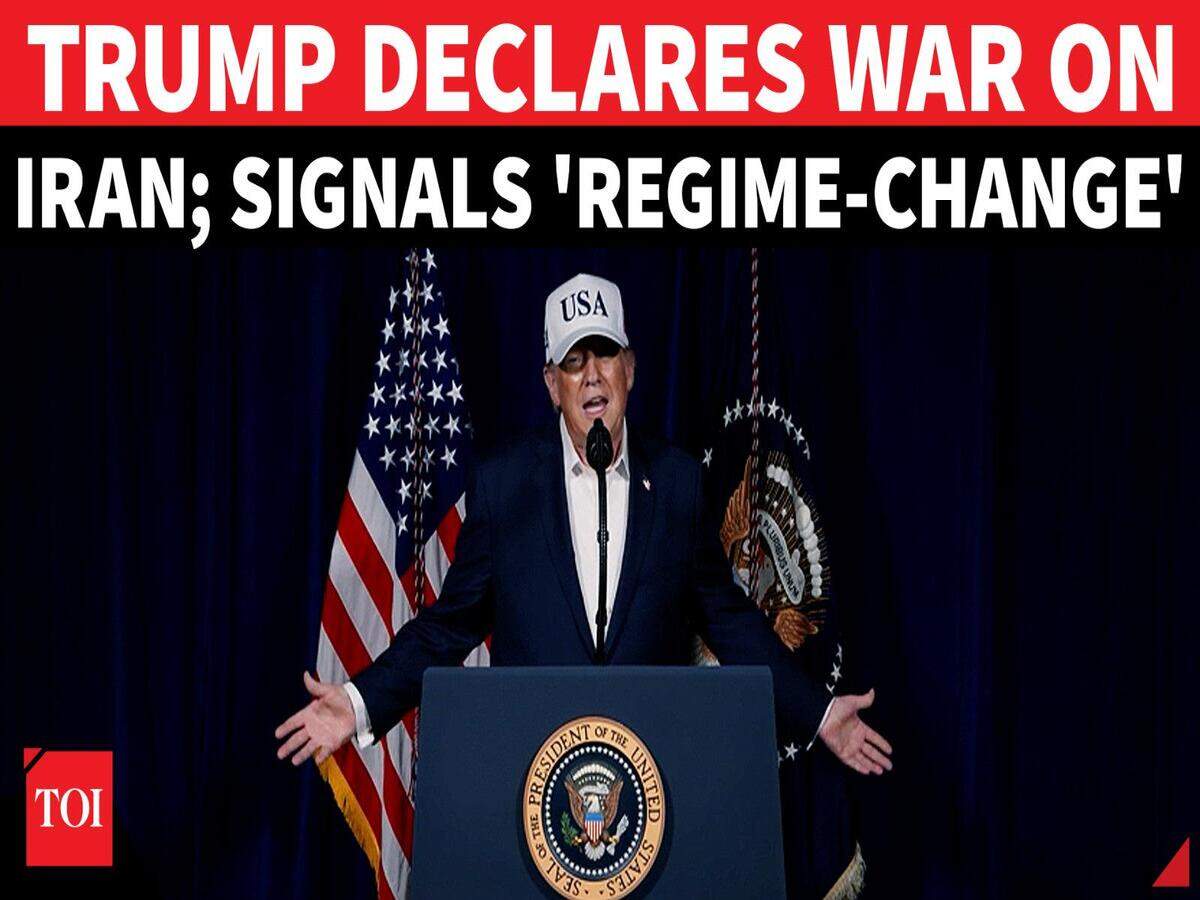
In a bold assertion that has reverberated across geopolitical and financial spheres, Donald Trump declared that the war in Iran is « quasi-complete, » signaling a dramatic shift in the Iran conflict dynamics. Speaking to CBS, Trump outlined a sweeping defeat for Iran, underscoring the loss of its navy, air force, communications networks, and a significant ding to its missile and drone capabilities. This declaration not only marks a pivotal moment in US foreign policy but also sends ripples through the Middle East and global markets, as the region’s stability wavers.
Trump’s remarks emphasize that the hostilities are ahead of schedule by several weeks compared to previous estimations, intensifying speculation on the conflict’s imminent conclusion. Simultaneously, his telephonic conversation with Russian President Vladimir Putin, deemed « frank and constructive » by Kremlin officials, brings an intricate overlay to this volatile tableau—linking the Iran struggle with ongoing tensions in Ukraine. This dialogue represents a rare convergence of interests amid a network of international disputes, suggesting potential diplomatic channels that could influence US-Iran relations and broader strategic negotiations.
- Trump’s assertion of a « very complete » war in Iran challenges conventional caution, projecting near-total incapacitation of Iran’s military forces.
- The simultaneous US-Russia engagement on conflicts in Iran and Ukraine signals a complex geopolitical interplay with implications beyond the battlefield.
- Financial markets and energy prices remain sensitive to developments, underlining the conflict’s reach into global economic stability.
- The war’s progression features prominently in analyses of US strategic goals in the Middle East, amid heightened scrutiny of Middle East conflict latest.
The Evolving Status of the Iran War and Its Military Implications
The Iran war status as declared by Trump reflects a marked degradation of Iran’s defensive and offensive military infrastructures. The decimation of Iran’s navy and air force capabilities effectively neutralizes its ability to project power across the Persian Gulf, a critical artery for international oil supply. This crippling of military assets extends to the degradation of missile systems and drone operations, historically pivotal tools in Iran’s tactical playbook.
This military weakening has profound ramifications on regional security and the broader strategic balance. The destruction wrought, meticulously reported through multiple intelligence channels, feeds into a narrative of swift and decisive action. Nonetheless, the ramifications for regional stability remain unpredictable. Analysts caution that while the primary military conflict may be winding down, underlying tensions persist, supported by Iran’s asymmetric warfare potential. Trade and energy sectors, acutely impacted, are closely watching these developments, with many observers turning to detailed insights available in resources on Iran Hormuz vessel threat.
Diplomatic Underpinnings: Trump-Putin Dialogue Amid War and Peace Efforts
The announcement of the phone conversation between Trump and Putin introduces an essential dimension to understanding the conflict’s trajectory. Both leaders, despite adversarial postures in other arenas, engaged in a dialogue characterized by openness regarding the crises in Iran and Ukraine. The Kremlin’s revelation of these communications points to attempts at managing or potentially resolving some of the tension points that disrupt global order.
Embodied in this bilateral engagement is the complexity of modern warfare and diplomacy, where military conflicts are inextricably linked with negotiations and geopolitical strategy. The inclusion of the Iranian war discussion alongside Ukraine reflects a broader attempt to stabilize hotspots that bear directly on Europe’s and the Middle East’s security landscapes. This dynamic underscores a delicate balance where military declarations intersect with diplomatic endeavors, which could influence upcoming talks found in Iranian nuclear talks.
Economic Shockwaves in the Middle East: Energy Markets and Global Impact
The reverberations of the military conflict extend well beyond battlefield victories. The Middle East’s intricate web of energy exports means that the war in Iran disrupts the lifeblood of global oil markets. Crippling Iran’s military extends beyond mere military advantage—it directly pressures the flow of oil through strategic chokepoints like the Strait of Hormuz, which continues to be a focal point for maritime security concerns.
As the Trump announcement circulates, traders and economies worldwide absorb the implications. Volatility in energy prices underscores the fragility of global dependencies on the Middle East’s stability. Market participants increasingly rely on advanced forex trading apps and analytic tools to navigate this unpredictability, reflecting broader economic shifts resulting from geopolitical upheavals. Ensuring economic resilience in this context becomes a priority, blending strategic foresight with real-time adaptability.
