
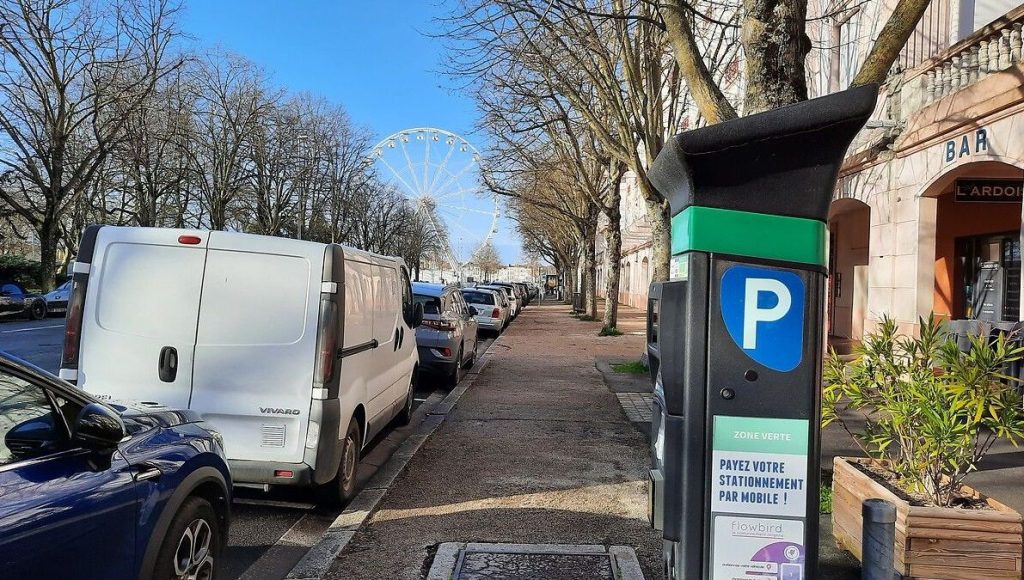
In 2025, Beauvais witnessed a significant economic and urban policy challenge as the closure of nearly twenty downtown shops highlighted the tension between parking management and commercial vitality. The controversy revolves around increasing fines and the stringent use of license plate recognition technology—dubbed locally as the “sulfateuse à PV”—which doubled the city’s parking revenue but fueled public discontent. In the lead-up to the 2026 municipal elections, candidates present sharply contrasting visions for balancing the need for effective traffic management and sustaining commerce within Beauvais’ historic center.
Among the contenders, Franck Pia, the incumbent mayor representing the UDI, insists that the downtown district is far from dying and cites a modest late-year rebound as evidence. His approach leans toward maintaining the current parking policies, emphasizing the financial benefits that bolster public services. Meanwhile, opposition candidates including Roxane Lundy (Left Unity), Claire Marais-Beuil (RN), and Frédéric Segretain (Independent) argue for more lenient or alternative parking schemes, pressing for increased availability of free parking zones to revitalize shopfronts and encourage local shopping experiences. This debate underscores the broader urban challenges of 2026 where technology-driven enforcement tools intersect with community needs and commercial survival.
Impact of License Plate Recognition and Fines on Beauvais Commerce
The introduction of license plate recognition cameras in 2025 revolutionized how parking violations were tracked, leading to an exponential rise in issued fines. This surveillance strategy has effectively doubled the city’s parking income, fueling robust funding streams for crucial public services. However, critics argue that the aggressive fining system has contributed to the downtown exodus of small businesses, which find the cost and risk of parking increasingly prohibitive for customers. While some merchants have closed their doors permanently, others have voiced concerns about declining foot traffic attributed to the less accessible urban environment.
Balancing Urban Policy: Accessibility vs. Revenue
Efficient traffic management is a pillar of contemporary urban policy, yet Beauvais’ case reveals the tightrope elected officials walk in managing financial health without sacrificing economic vibrancy. The argument for expanding free parking options raises questions about sustainable city funding models reliant on parking fees. Candidates like Roxane Lundy advocate for a more balanced policy that would attract shoppers back with improved accessibility while also suggesting investments in alternative transportation modes. This stance challenges the current model favored by Mayor Pia, who stresses the fiscal indispensability of parking fines to support municipal operations.
Electoral Stakes Surrounding Parking and Commerce in Beauvais 2026
The stakes of the 2026 municipal elections in Beauvais extend beyond mere governance into the very fabric of the city’s economic future. Candidates’ proposals around parking will influence not only urban mobility but the economic ecosystem of countless local businesses. The debate encapsulates broader themes of how technological tools like license plate recognition reshape citizen interaction with urban spaces, prompting voters to reconsider priorities between convenience, enforcement, and commerce vitality. Observers suggest that the winner’s approach to parking and commerce could serve as a template for similar mid-sized cities grappling with these issues.
For more detailed insights on urban retail challenges and public policy, readers may find useful parallels in cities facing similar commercial pressures, as outlined in reports like La Rochelle’s retail real estate trends or broader economic reforms evidencing political strategy interplay such as labor reforms in Latin America. These contexts enrich understanding of the dynamics unfolding in Beauvais.
