
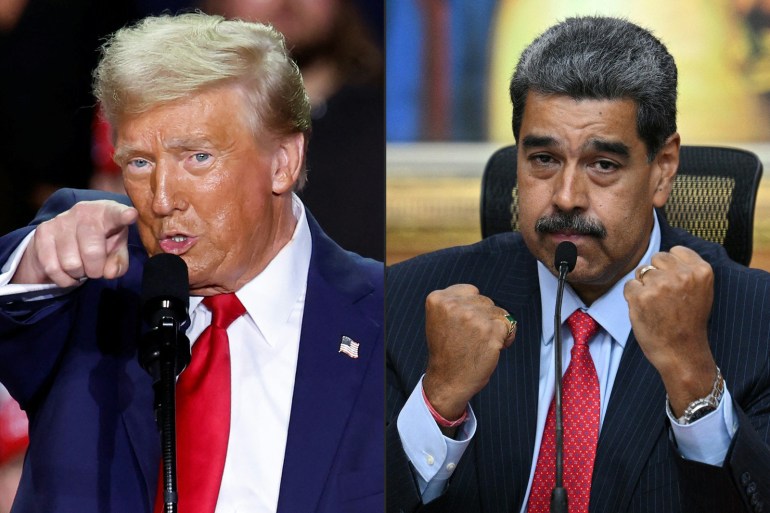
In a surprising geopolitical pivot, Venezuelan President Nicolás Maduro expressed his readiness to engage in bilateral talks with former U.S. President Donald Trump over critical issues such as drug trafficking and Venezuela’s oil sector. This unexpected declaration emerges amid heightened tensions fueled by a significant American naval presence in the Caribbean and aggressive U.S. sanctions targeting Venezuelan crude exports. The dynamics of this willingness to negotiate suggest a complex interplay between international pressure and the economic imperatives of a country grappling with sanctions and accusations of narcotrafficking. Maduro’s nuanced position towards the alleged CIA strike on Venezuelan port facilities, neither confirming nor denying the event, further complicates the equivocal environment surrounding potential diplomatic engagements.
Key highlights include Maduro’s openness to engage in discussions “wherever, whenever,” signaling a flexible approach possibly aimed at alleviating U.S. pressure. His acknowledgment of continuing cooperation on migration issues and his readiness to reengage with American oil companies like Chevron underscore a pragmatic strategy to revive Venezuela’s economy despite overarching geopolitical roadblocks. However, the shadow of U.S. accusations regarding Maduro’s administration’s links to narcotrafficking remains a profound obstacle to seamless dialogue, raising questions about the sincerity and feasibility of such negotiations.
Maduro’s Strategic Readiness to Enter Negotiations Amid U.S. Military Pressure
The public announcement of Venezuela’s willingness to negotiate with the United States unfolds against a backdrop of extensive American military activities concentrated near Venezuelan waters, coinciding with an intensification of sanctions. This evolving scenario highlights diplomacy as a tactical maneuver by Maduro, arguably aimed at counterbalancing increasing economic strain and military threats. The readiness to discuss both drug trafficking and oil cooperation serves as acknowledgment of the intertwined nature of these sectors in the geopolitical contest between Venezuela and the U.S.
Maduro’s stance, openly communicated through state media, reveals an attempt to recalibrate Venezuela’s international posture. Rather than halting at accusations of illicit activities, this approach signals a pragmatic openness to economic and security dialogues, potentially fostering a pathway to easing sanctions that severely impact Venezuela’s lucrative oil industry. This perspective aligns with recent global trends where economic imperatives often override unilateral confrontations, pressing governments toward more constructive engagement.
Complexities of Drug Trafficking and Oil in Venezuelan-U.S. Relations
Drug trafficking remains a core sticking point, with accusations from the U.S. implicating Maduro’s government as deeply entangled in narcotics networks. The response from Caracas has been consistent denial, framing such allegations as a pretext for intervention aimed at seizing control of Venezuela’s vast oil reserves. This ongoing dispute intensifies the challenge of establishing transparent bilateral talks.
The intersection of illicit trade and energy politics in Venezuela encapsulates a broader contest over resource control and security. Maduro’s professed openness to negotiations with U.S. companies such as Chevron highlights a strategic attempt to leverage energy exports as part of a broader economic normalization, even if political distrust persists. Such diplomacy may also hinge on addressing narcotrafficking through joint efforts, critical for restoring international confidence and stability.
Economic and Diplomatic Implications of Re-engaging U.S.-Venezuela Talks
By declaring a willingness to negotiate, Maduro injects a complex variable into international energy markets and geopolitical alignments. The potential resumption or expansion of energy cooperation could influence global oil prices and supply chains, especially given Venezuela’s significant reserves. This possibility resonates with recent trends observed in global trade negotiations and sanctions debates, where integrated economic strategies often reshape longstanding diplomatic impasses.
Yet, the path forward is laden with unresolved challenges: the status of detained political prisoners, sanctions removal negotiations, and credible verification of drug trafficking controls stand as key hurdles. Maduro’s recent release of imprisoned critics, albeit conditional, may be interpreted as a diplomatic gesture aimed at building trust to facilitate deeper negotiation frameworks.
Challenges and Prospects for Sustained Bilateral Diplomacy
While the U.S. administration under Trump maintained a firm stance on intervention threats, Maduro’s declarations signal a new phase where direct diplomatic communications could mitigate military risks and economic destabilization. The evolving narrative places Venezuela’s future at the nexus of global energy markets and anti-narcotic efforts, where successful negotiation might yield mutual benefits.
However, trust deficits, espionage allegations, and geopolitical rivalry complicate this potential rapprochement. The feasibility of a comprehensive bilateral agreement demands not only political will but also transparent mechanisms to monitor compliance on contentious issues like drug interdiction and fair energy commerce. Navigating these complexities will require astute diplomacy and patience from both Caracas and Washington.
