
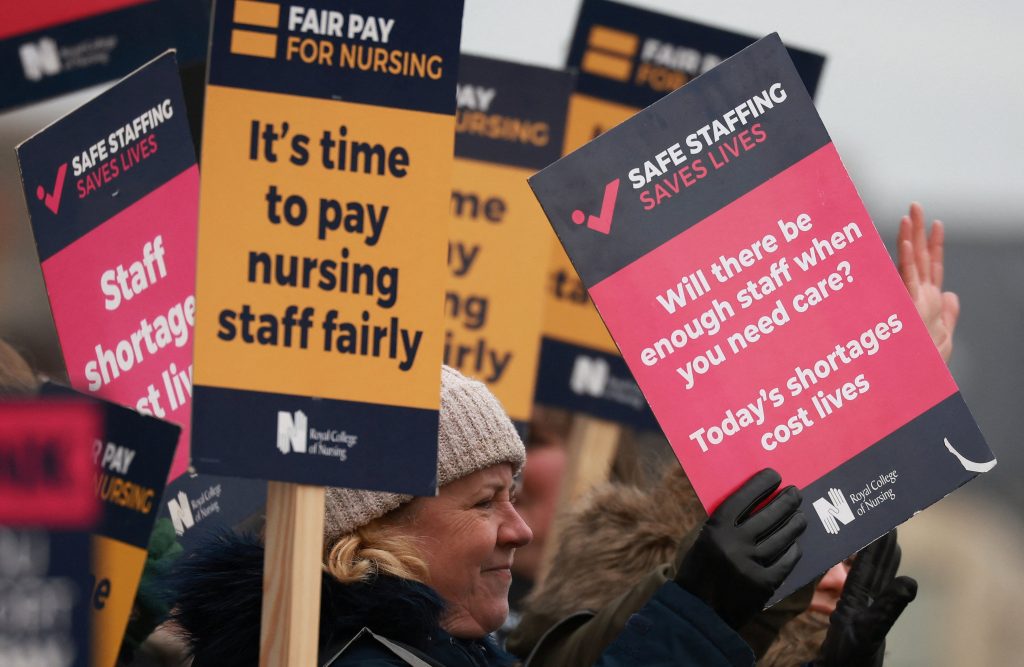
The ongoing debate about whether strikes should be banned during collective bargaining negotiations has been reignited by the release of the new book « Saving Social Democracy » on January 21, 2026. Written by economist Gilbert Cette, sociologist Guy Groux, and Richard Robert, director of the editorial team at Telos, this provocative work challenges the long-standing traditions and practices embedded in French social democracy. Their analysis sharply criticizes the disruptive role that strikes often play during negotiation periods, arguing that they contribute to a « devitalized and perverted » social democracy that struggles to find constructive paths to agreement. The authors highlight how labor unions, despite claiming greater normative power, frequently abandon the negotiation tables, exemplified by the fractious dialogue around the 2025 pension reform talks—where major unions like FO and CGT exited discussions prematurely, leading to chaos rather than compromise.
At the heart of their proposal lies a contentious idea: to restrict strikes during collective bargaining negotiations not to curtail the right to strike but to restore its original purpose as a last-resort defense rather than a primary negotiating tactic. Drawing attention to international contrasts, they point out that in countries like Germany and the Nordic states, powerful unions prefer to leverage their influence at the bargaining table before resorting to industrial action. France’s model, characterized by a low rate of union membership, fragmentation among eight major confederations, and heavy reliance on state and corporate funding, creates a paradox of perceived strength but practical irrelevance in decision-making processes. This paradox perpetuates a cycle of stalemates and social conflict rather than effective workplace negotiations.
Controversies Surrounding the Strike Ban During Collective Bargaining
The suggestion to implement a strike ban during collective bargaining stirs significant controversy, touching on foundational labor rights and social democracy principles. Opponents argue this would silence workers at critical moments of labor dispute, undermining their ability to leverage industrial action for better terms. However, proponents emphasize that current practices often deploy strikes preemptively, before genuine negotiations occur, compromising the effectiveness of collective bargaining. This situates strikes less as a tool of empowerment and more as a symbol of systemic dysfunction. In this light, the book’s argument pushes for a recalibrated balance where labor unions are encouraged to exercise their influence primarily through dialogue and negotiation while preserving the right to strike as a meaningful, measured response to impasses.
Reforming Union Representation to Strengthen Workplace Negotiations
An essential aspect of revitalizing social democracy in France involves addressing the fragmented union landscape. The authors advocate for reducing the number of representative unions and enhancing their electoral legitimacy, thereby clarifying their role in negotiating workplaces conditions and industrial disputes. The current environment, where the power to say no often eclipses the capacity to constructively engage, fosters an atmosphere prone to frequent strikes and disruptions. This recommendation aligns with observed strategies internationally, where consolidated representation results in more effective negotiation outcomes and fewer disruptive strikes. Readers can explore parallels and strategies in negotiation success in other contexts, as detailed in resources such as negotiation success strategies.
International Perspectives on Labor Disputes and the Right to Strike
Looking beyond France, it is instructive to examine how other nations manage the delicate balance between protecting workers’ rights and ensuring stable labor relations. Many international systems enshrine striking as a critical labor right but couple it with regulatory frameworks that emphasize exhausting all negotiation avenues first. For instance, in Germany and Nordic countries, unions exhibit a strategic restraint, engaging extensively in social dialogue and workplace negotiations before any industrial action is taken. This model contrasts sharply with France’s often confrontational approach, where strikes frequently erupt and disrupt economic stability.
The current surge in labor actions in the U.S., involving approximately 271,500 workers engaged in major work stoppages in 2024, including public health care workers and telecommunications employees, illustrates the global nature of this debate. These episodes raise questions about the efficacy and consequences of strikes during negotiation processes, and policies around strike bans have been central to discussions about labor rights and economic impact. The interaction of political forces, union strength, and public opinion shapes this dynamic, highlighting the need for nuanced discussions of collective bargaining frameworks and labor dispute management.
Challenges in Balancing Labor Rights and Democratic Governance
In advocating for change, the authors of « Saving Social Democracy » confront the tension between preserving the essential right to strike—which underpins worker empowerment and democratic expression—and preventing the perpetual standoff that cripples effective governance. Their proposal is not without critics, but it invites policymakers, unions, and employers to reconsider the balance between industrial action and constructive conflict resolution.
As France moves toward the 2027 presidential elections, where social and economic issues will dominate, the debate surrounding the potential strike ban during collective bargaining is likely to intensify, engaging labor unions, political parties, and the public in a fierce discussion about the future of social democracy and workplace negotiations. For those interested in the current intersections of labor dynamics and political maneuvering, ongoing industrial disruptions such as the halted talks at Sonoco (Sonoco negotiations halted) provide real-time case studies of the stakes involved when strikes intersect with critical negotiations.
