
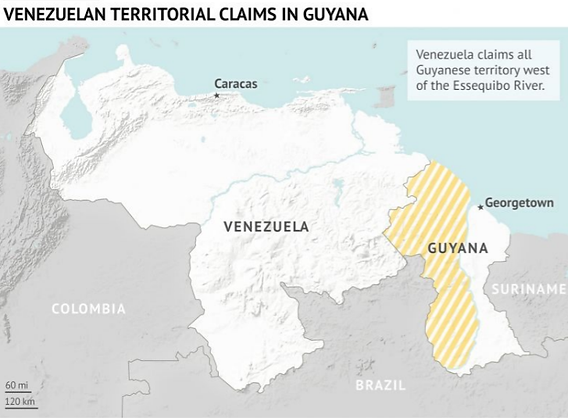
Venezuela and Guyana are locked in a persistent territorial dispute over the oil-rich Essequibo region, an area administered by Guyana for over a century but contested due to overlapping border claims. The stakes in this South American conflict dramatically escalated after significant offshore oil reserves were discovered in 2015, turning Essequibo into a coveted prize in the realm of energy resources. In early 2026, Venezuela’s interim government urged for “good faith negotiations” with Guyana, marking its first official stance since a shift in power following U.S. military actions against former President Nicolás Maduro. This call for diplomacy seeks to defuse tensions amid a backdrop of heightened strategic posturing fueled by geopolitical alliances and economic imperatives.
The complex dynamics of this dispute are fueled by the geopolitical influence of the United States, an ally of Guyana which has publicly vowed to protect its interests in the Essequibo region. Caracas’ move toward “good faith negotiations” contrasts with previous aggressive claims, including a 2023 referendum and the appointment of Venezuelan officials for the disputed territory—steps that underscored Venezuela’s unresolved aspirations over Essequibo. However, with Washington’s firm backing of Guyana, Caracas faces pressure to pursue diplomatic engagement rather than escalation. This situation exemplifies the delicate balance in South American geopolitics where energy wealth intersects with longstanding territorial claims, underscoring the urgency for sustainable and peaceful conflict resolution mechanisms.
Challenges and Opportunities in Negotiating the Essequibo Territorial Dispute
The ongoing territorial dispute between Venezuela and Guyana over the Essequibo region is emblematic of broader geopolitical and economic challenges in South America, further complicated by the presence of abundant oil reserves. The Essequibo, spanning approximately 160,000 square kilometers, represents a strategic asset that could reshape regional energy markets if access and sovereignty are securely established.
Negotiations are complicated by a historical legacy that dates back to colonial demarcations, clouded further by recent discoveries that exponentially increase the territory’s value. The Venezuelan government’s recent appeal for “good faith negotiations” signals a possible shift toward diplomacy, but it remains to be seen whether this stance will translate into constructive dialogue or merely serve as a strategic repositioning under its new leadership. Meanwhile, the security guarantees offered by the United States to Guyana reinforce the geopolitical tension but could potentially open pathways for multilateral mediation.
The Imperative of Good Faith Negotiations in Energy-Rich Disputes
In contests over territories endowed with valuable resources like oil, the negotiation process demands transparency, mutual respect, and a commitment to peaceful resolution. Venezuela’s call for “good faith negotiations” with Guyana might be interpreted as a pragmatic acknowledgment of this imperative, especially in light of international alliances and economic pressures. The historical intransigence that marked earlier interactions can no longer serve the interests of either nation that risk destabilizing regional energy security.
For private and institutional investors monitoring this situation, stability and predictability in South America’s energy sector are paramount. Disruptions tied to territorial disputes can wreak havoc on oil prices and investment flows, impacting not only the immediate region but global markets. Lessons from similar energy disputes emphasize the value of diplomatic initiatives that ensure equitable sharing of resources and recognition of sovereign rights.
Geopolitical Realignments and Their Impact on the Essequibo Conflict
The influence of international actors, particularly the U.S. alliance with Guyana, adds complex layers to the Essequibo territorial dispute. Washington’s defense assurances to Guyana deter overt military conflict but simultaneously push Venezuela to seek alternative strategic approaches, including the pursuit of negotiations framed around « good faith. » These geopolitical realignments echo global patterns observed in other resource disputes, where diplomatic engagement often offers the most viable path forward.
Regional organizations and trade blocs in South America watch closely, as the outcome of this dispute holds implications for future cooperation in energy development and cross-border trade. The energy riches of Essequibo are not merely a bilateral concern but a catalyst influencing the regional economy’s trajectory. Effective diplomacy here could become a template for resolving similar conflicts across resource-rich zones globally.
To explore how international diplomacy influences resource conflicts similar to the Essequibo case, parallels can be drawn with ongoing negotiations involving the United States and Ukraine and regional trade agreements such as the recent Mercosur trade deal which shape South American economic dynamics. These examples underscore the critical role of good faith negotiations in stabilizing regions defined by complex historical and economic interests.
