
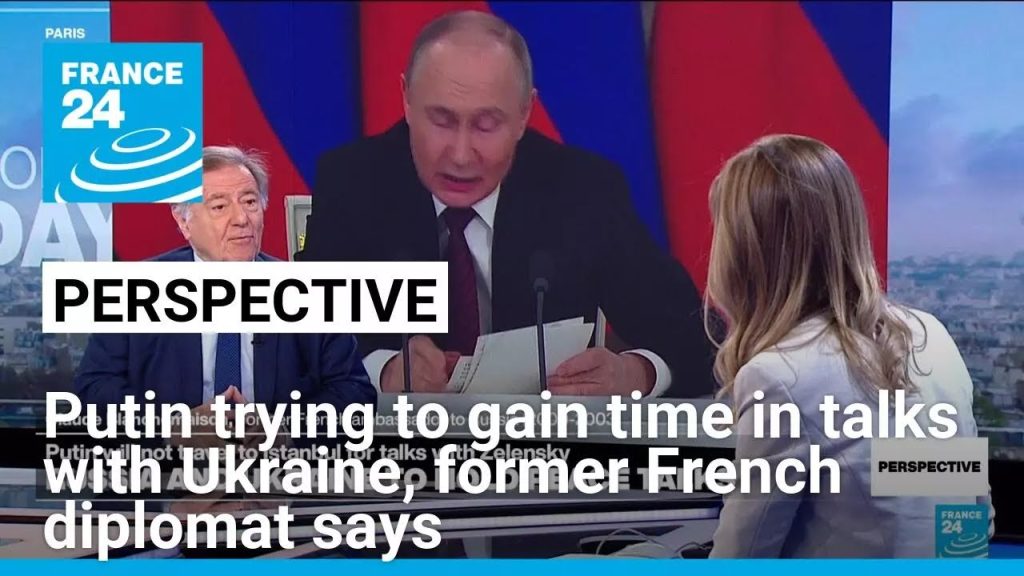
As the geopolitical landscape of Eastern Europe remains fraught with tension, the French Ambassador to Russia, Nicolas de Rivière, offers a candid assessment of the current state of negotiations concerning the Ukraine conflict. Appointed in March 2025, de Rivière emphasizes that despite numerous diplomatic overtures, genuine discussions aimed at compromise have yet to materialize. The Kremlin maintains a rigid stance, primarily engaging with the United States, while showing little openness to bilateral discussions with France or Ukraine. This dynamic underscores a broader pattern within international relations, where power plays and strategic interests overshadow meaningful dialogue.
De Rivière’s insights reveal that Russia’s negotiating posture is fundamentally transactional, with President Vladimir Putin signaling his intent to continue military operations until all key demands are met. This approach inevitably leads to a slow and unfavorable evolution on the ground for Ukraine, as peace talks stall and conflict persists. The ambassador notes a significant degradation in Franco-Russian relations, a consequence not of France’s actions but of Russia’s aggressive incursion into Ukraine. This distortion further complicates diplomatic efforts, with Russian authorities perpetuating misrepresentations of France and European Union positions, falsely casting them as relentlessly antagonistic toward Russia.
Understanding the Current Stalemate in Ukraine-Russia Negotiations
The assertion by the French Ambassador that real negotiations « have yet to truly begin » highlights the gap between diplomatic appearances and substantive dialogue. While the Coalition of Volunteers deliberates on security guarantees for Ukraine, Russia’s communication predominantly involves the United States. From a strategic perspective, this exclusivity marginalizes other international stakeholders, impeding the multifaceted diplomacy required for conflict resolution. The ambassador’s analysis unveils a critical paradox: formal talks exist, yet the negotiation mechanics remain superficial, with Moscow primarily focused on reinforcing its position rather than exploring compromise.
This situation reflects a complex geopolitical chess game. The Kremlin’s emphasis on imposing conditions as prerequisites for halting military actions aligns with broader trends in authoritarian diplomacy, where show of force substitutes for genuine negotiation. Consequently, the slow erosion of Ukraine’s territorial integrity continues amid what can be described as diplomatic inertia. For analysts and observers studying this conflict, the ambassador’s remarks serve as a vital barometer of the hardening Russian resolve and the fragmented nature of peace talks.

The Implications of Degraded Bilateral Relations on Peace Talks
The stark deterioration of Franco-Russian relations underscores the challenges facing diplomacy. De Rivière points out the clear causality: Russia’s invasion triggered this breakdown, meaning any blame must be appropriately assigned. This clarity is crucial amid narratives that attempt to equate or deflect responsibility. Within international relations, such diplomatic ruptures not only hamper direct bilateral dialogues but reverberate across multilateral forums, affecting efforts by the European Union and NATO to influence the course of the conflict.
Moreover, Russia’s tendency to distort France’s position feeds into a broader Kremlin strategy of isolating Western influence by portraying Europe as inherently hostile. This narrative, however, contrasts sharply with diplomatic realities where France and its allies have consistently advocated for a peaceful resolution aligned with international law. For stakeholders monitoring global diplomacy, recognizing this dichotomy is essential to understanding the challenges embedded in the ongoing peace talks.
France’s Role and Strategy Amidst Complex Peace Discussions
Despite strained relations and a distant dialogue with Russia, France continues to navigate a complex diplomatic path. Nicolas de Rivière, functioning as a quasi-channel between Paris and Moscow, acknowledges the difficulty but also the critical importance of his mission. The absence of direct high-level conversations—exemplified by the last Macron-Putin call in mid-2025—puts additional pressure on diplomatic intermediaries to keep communication lines open. This dynamic emphasizes France’s steadfast commitment to peaceful resolution, even as it operates within a constrained and challenging environment.
This tenacity reflects France’s broader geopolitical strategy, wherein engagement, rather than isolation, provides a platform for influence. Coupled with coordinated efforts involving the United States and other allies, these diplomatic maneuvers aim to facilitate future agreements. Yet, as highlighted by the ambassador, the path remains arduous due to Russia’s current posture focused on battlefield gains and maximalist demands rather than genuine negotiation.
Amid this complex tableau, the implications extend beyond the immediate conflict, affecting global markets and geopolitical stability. Observers know that the prolonged tension also impacts economic indicators such as energy prices, where Ukraine’s stability is intertwined with global oil market fluctuations. The delicate balance of international negotiations remains a key factor for traders and policymakers alike, illustrating how diplomacy and conflict resolution intersect with financial markets and economic forecasting.
In-depth insight into these evolving peace talks and their ramifications is available at analysis on Ukraine war peace talks. For those seeking a detailed understanding of the Kremlin’s negotiation tactics and the influence of international actors, resources such as the Kremlin’s diplomatic stance and the broader geopolitical strategies outlined in Putin’s Ukraine strategy provide valuable context. Furthermore, the interplay between US diplomatic initiatives and Russian positioning is explored at Trump-era Ukraine negotiations, offering historical perspective relevant to current efforts.
The trajectory of these peace talks will undeniably shape not only the future of Ukraine but the contours of international relations in the years to come, where diplomatic tenacity and strategic patience remain indispensable in navigating the enduring conflict.
